
Malacca
Explore the vibrant wonders of Malacca


About this state
Getting around
Safety & comfort first
Must-visit
Baba Nyonya Heritage Museum
Baba Nyonya Heritage Museum is a traditional Peranakan townhouse near Jonker Street, opening rooms of carved furniture, heirloom porcelain and richly embroidered costume to careful visitors. It preserves the domestic world of Melaka’s Straits Chinese families—fusion flavours of Malay, Chinese and European taste under one tiled roof. Guided visits are recommended so stories of wedding chambers, kitchens and merchant life come vividly alive for guests. Visit for intimate heritage atmosphere just steps from Jonker’s busy shops—book ahead when possible and expect a vivid, house-scale museum rather than a vast modern gallery.
View detailsMaritime Museum
(Flor de la Mar)
The Maritime Museum occupies a full-scale replica of the Portuguese galleon Flor de la Mar, docked as a striking riverside landmark along Melaka’s historic waterfront. Inside, galleries trace the city’s role in spice routes, shipwreck lore and centuries of maritime trade that made Melaka a global entrepôt. Climb aboard for decks, exhibits and photographs of the hull against the riverfront skyline. Visit to anchor a Melaka heritage day in seafaring story—pair with St. Paul’s Hill and the river promenade for an easy colonial-and-trade walking circuit through the compact old centre.
View detailsMelaka Sultanate Palace Museum
Melaka Sultanate Palace Museum is a timber palace reconstruction inspired by descriptions in the Malay Annals, presenting court life, ceremony and power of the Melaka Sultanate. Sitting at the foot of St. Paul’s Hill, it places visitors beside the old city’s hilltop ruins and riverfront history in one walkable heritage cluster. Step through carved halls of costume, weapons and ceremonial displays that sketch how Melaka once ruled the strait trade. Visit for an accessible introduction to Malay royal culture—fine woodwork, storytelling panels and a photogenic facade that makes the sultanate era feel tangible again for travellers.
View detailsSt. John’s Fort
St. John’s Fort crowns a Melaka hill with Dutch–Portuguese-era ruins and wide views over the straits and city rooftops. Quieter than Dutch Square below, it rewards a short climb with cannon platforms and breezy heritage atmosphere. Walk up for photos of the waterfront and old town canopy, then descend toward Porta de Santiago. Expect fewer crowds, tropical shade and a strategic vantage once prized by colonial defenders. Bring water for the hill walk, wear shoes with grip, and enjoy the fort as a quieter chapter of Melaka’s colonial military story after the denser crowds of Dutch Square.
View detailsHang Tuah Centre
Hang Tuah Centre celebrates Melaka's legendary warrior Hang Tuah—the folk hero of loyalty, skill and Malay court drama immortalised in classic literature across the region. Exhibits and performance spaces unpack how one name became a lasting symbol of courage and identity on the peninsula. Watch cultural shows when scheduled, browse displays of legend and history, and connect the stories to Melaka's wider sultanate landscape nearby. It suits travellers who want more storytelling atmosphere on a full Melaka heritage day. The highlight is stepping beyond forts and churches into living legend—Hang Tuah's name still echoes across the peninsula, bringing sultanate-era courage and identity into today's cultural space.
View detailsSam Po Kong Temple
Sam Po Kong Temple (also known as Poh San Teng / 宝山亭) is a Chinese temple in Melaka linked to Admiral Zheng He's voyages and the early Chinese community. Set near Hang Li Po Well and the historic hillside of Bukit Cina, it anchors stories of diplomacy, settlement and devotion that still shape the city's Chinese heritage. Wander incense-scented halls, then walk to the well and cemetery ridges for a compact heritage loop. Come for living worship and the red-and-gold detail that fills the courtyards. The highlight is why Zheng He and Hang Li Po remain central to Melaka's multicultural memory—a working temple that folds seafaring, settlement and faith into one old-city stop.
View detailsHang Li Po Well
Hang Li Po Well—also called Perigi Hang Li Po / 三宝井—stands beside Sam Po Kong Temple in Melaka, tied to the legend of Princess Hang Li Po and early China–Malay courtly exchange. Tradition holds that the well served the princess's entourage; whether history or legend, it remains a condensed symbol of Melaka's multicultural founding story. Pause by the temple for atmosphere: view the well, wander Sam Po Kong courtyards, then link onward to the riverside and colonial streets. It is a brief but meaningful stop if you want Chinese footprints woven with Malay sultanate legends in the old city. The highlight is how one well turns a courtly marriage legend into a tangible place—beside the temple, Melaka's China–Malay founding memory becomes something you can stand beside and feel.
View detailsKampung Hulu Mosque
Kampung Hulu Mosque is one of Melaka’s oldest mosques, blending Javanese and local Malay design near the historic Malay quarter of the old town. Tiered roofs and a riverside setting speak of early Muslim communities along the Melaka trading river. View respectfully from outside if services are underway, then continue toward Dutch Square and the river promenade. It anchors Melaka’s living Islamic heritage beside the better-known colonial landmarks. The mosque remains an active place of worship; dress modestly if you approach the compound, and let its layered roof silhouette contrast with Melaka’s European-era monuments nearby.
View detailsSubmarine Museum Melaka
The Submarine Museum at Klebang, Melaka, brings a decommissioned Royal Malaysian Navy vessel ashore—an unusual stop on official visitor guides. Guests squeeze through narrow corridors past torpedo bays, the control room and cramped crew quarters to feel naval life at sea. It contrasts sharply with Dutch Square and Jonker heritage: trade-port history on one side, modern navy technology on the other. Good for families and military buffs; go outside peak heat and wear comfortable shoes. Pair with Melaka Straits Mosque and waterfront photo stops for a western-side half-day beyond the UNESCO core.
View details Attractions
Stadthuys & Dutch Square
Stadthuys and Dutch Square form Melaka's most recognisable historic core—a cluster of Dutch-era civic buildings painted a deep terracotta red that has become the city's visual signature. After the Dutch took Melaka in the seventeenth century, this square served as the administrative seat; it still frames Christ Church, the clock tower and the old Stadthuys museum along the heart of the former Strait settlement. Wander the open square for photos of the red façades, then step into the museums for maps, colonial artefacts and the layered Malay, Portuguese, Dutch and British story of the port. Come early or late to soften the heat and crowds, and link nearby Jonker Street for a compact old-town morning. What stays with you is how instantly those terracotta walls announce Melaka—one square that turns colonial layers into the city's most photogenic historic stage.
View details Attractions
A Famosa
A Famosa—better known today by the surviving Porta de Santiago gateway—is Melaka’s most recognisable Portuguese-era remnant. Built after the 1511 conquest, the fortress once guarded the harbour; centuries of sieges and demolitions left mainly this stone arch as a silent witness to empire on the Strait. Pose for the classic photo with St. Paul’s Hill behind you, then continue uphill to the church ruins or toward Dutch Square. Few landmarks condense Melaka’s colonial story so tightly: come early or near sunset to avoid crowds and feel the weight of five centuries of trade and conflict.
View details Attractions
Christ Church Melaka
Christ Church Melaka, the salmon-pink Dutch Reformed landmark beside Dutch Square, is among the oldest surviving Protestant churches in Malaysia. Built in the mid-18th century under Dutch rule, its thick walls, tombstones and simple pews speak of Melaka’s centuries as a European trading stronghold. Stand on the square for the classic postcard view with the Stadthuys, then step inside when open to feel the cool hush of colonial brickwork. It anchors Melaka’s UNESCO core—visit with A Famosa and Jonker Street for a compact history walk through Portuguese, Dutch and British layers.
View details Attractions
St. Paul's Hill
St. Paul’s Hill (Bukit St. Paul) crowns Melaka’s historic core with the roofless ruins of St. Paul’s Church, once a Portuguese chapel and later a Dutch burial ground. From the summit, the Strait of Malacca opens below—the same waters that made Melaka a global trading port for centuries. Climb the steps from Dutch Square or A Famosa and pause among weathered tombstones and sea breezes. The hill is inseparable from Melaka’s colonial layers; visit at golden hour for soft light on the red ruins and harbour views that explain why this city shaped Southeast Asian history.
View details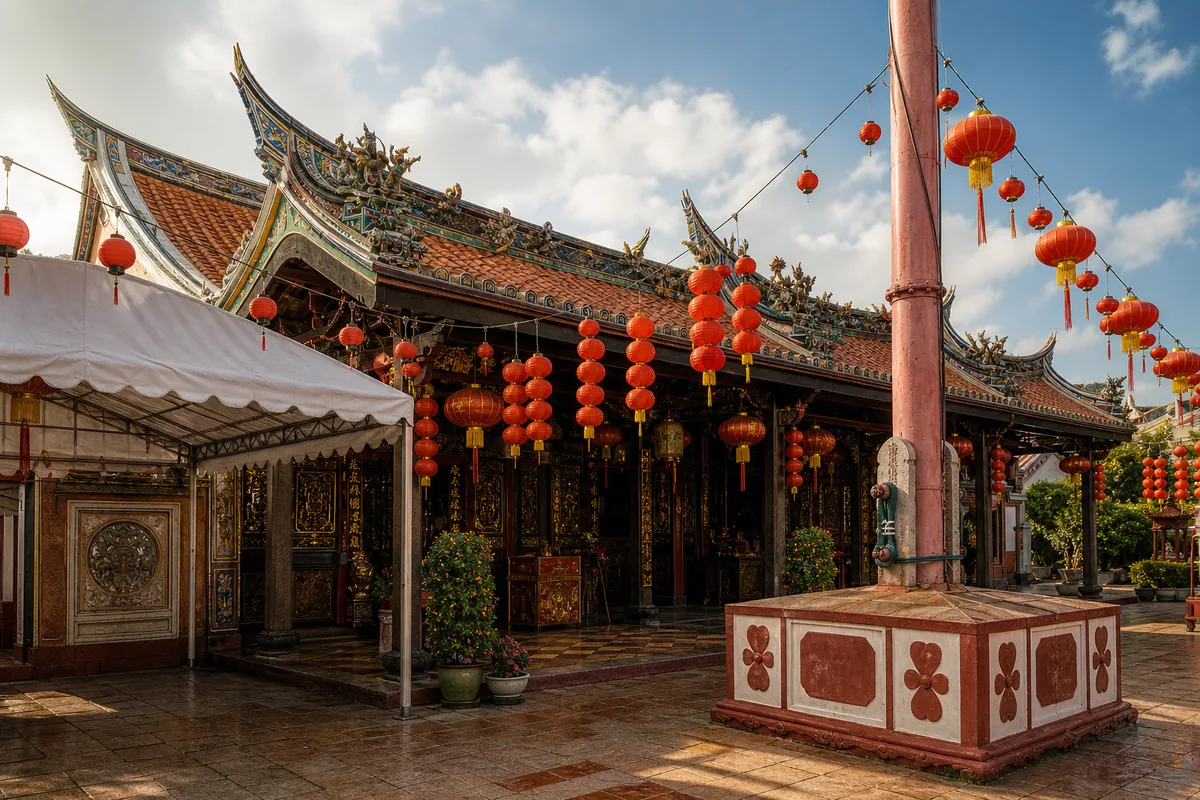 Attractions
Cheng Hoon Teng Temple
Cheng Hoon Teng Temple in Melaka is among Malaysia’s oldest Chinese temples, with exquisite Fujian-style timber work, ceramic roof ridges and a courtyard thick with incense. It has anchored Melaka’s Chinese community for centuries beside the historic centre. The temple’s character is living Hokkien devotion inside UNESCO-listed street fabric—architecture and faith intertwined. Dress modestly, keep voices low, and visit in the morning for softer light on carvings before the day’s heat and crowds build. Step back outside and Melaka’s Chinatown feels richer—Cheng Hoon Teng is the quiet spiritual root beneath the tourist buzz.
View detailsPortuguese Settlement Melaka
Portuguese Settlement Melaka is a Eurasian community village known for seafood restaurants, Kristang culture and weekend cultural shows by the sea. Descendants of Portuguese-era Melaka keep language, food and festivals alive on this coastal pocket. The settlement feels like a living cultural enclave—family eateries, church community ties and coastal breeze. Come for a seafood lunch, check weekend performance times, and explore with respect for residents who still call the village home. A seafood lunch here stitches Melaka’s Portuguese chapter into a trip that often stays only in Chinatown and the fort.
View detailsBukit Cina Melaka
Bukit Cina in Melaka is a historic Chinese cemetery hill with deep roots in the city’s Ming-era and Peranakan story. Paths climb among tombs and trees to viewpoints over Melaka’s old town and harbour approaches. The hill carries solemn heritage atmosphere rather than tourist gloss—centuries of diaspora memory in one green rise. Walk respectfully, avoid disturbing graves, and pair with nearby Portuguese Square or Jonker Street for a layered Melaka afternoon. A respectful hour on Bukit Cina adds depth to any Melaka visit that otherwise stays only on Jonker Street.
View details