
Sarawak
Explore the vibrant wonders of Sarawak


About this state
Getting around
Safety & comfort first
Must-visit
Niah National Park
Niah National Park in Sarawak is famous for vast cave chambers and prehistoric human finds reached by a long wooden boardwalk through peat swamp and limestone forest. Archaeology and nature share the same trail: painted rock shelters, excavation lore and cathedral-scale caverns that helped rewrite early settlement stories in Borneo. Visit for a classic half- to full-day of boardwalk hiking, cave exploration and museum context at park headquarters. Bring insect repellent and expect humidity. Treat the Great Cave and Painted Cave circuit as an archaeology-and-jungle classic—one of Sarawak’s most rewarding heritage-nature pairings outside Kuching.
View detailsSantubong National Park
Santubong National Park north of Kuching wraps coastal rainforest around the Santubong massif—hiking trails, birding and seasonal dolphin watching off Damai Beach. The mountain’s silhouette is a Sarawak icon, and lower paths suit visitors who want sea-and-forest scenery without a full summit push. Bring leech socks in wet months, start early for cooler climbs, and combine with cultural villages or Damai resorts nearby. It is an accessible wilderness fringe that shows why Kuching’s backyard feels so green and maritime at once.
View detailsGunung Santubong
Gunung Santubong rises above the coast north of Kuching, wrapped in local legend and offering summit views across rainforest to the South China Sea. The hike is moderate but humid and rooty—expect steep sections, wildlife calls and a rewarding ridge outlook when the cloud lifts. Start early to beat heat and afternoon storms; carry ample water and tell someone your plan. Pair the climb with Damai Beach or nearby cultural villages for a full Sarawak day that mixes myth, sweat and sea horizon. Give yourself unhurried time on site so small local details and shifting light can shape the visit.
View detailsOrchid Garden Kuching
Orchid Garden Kuching near the waterfront showcases Sarawak native and hybrid orchids in landscaped beds and shaded walkways—an easy floral pause in the capital. Colourful blooms and interpretive labels suit casual garden lovers and photographers seeking a short, fragrant stop. It pairs naturally with the riverside promenade or nearby museums when you want greenery without a jungle trek. Visit in the cooler morning for fresher flowers and softer light; allow thirty to sixty minutes before continuing into downtown Kuching. Give yourself unhurried time on site so small local details and shifting light can shape the visit.
View detailsLambir Hills National Park
Lambir Hills National Park near Miri protects a compact but rich rainforest known for waterfalls, dipterocarp forest and exceptional plant diversity that has drawn scientific research for decades. Trails climb through humid green to cascades where you can cool off after a sweaty Borneo hike. It suits a half- or full-day outing from Miri with basic facilities and marked paths—bring insect repellent, sturdy shoes and plenty of water. Come for an accessible taste of Sarawak jungle without committing to a multi-day expedition deep into the interior. After rain, trails become slippery clay—slow your pace on descents and keep to marked routes for safety.
View detailsSimilajau National Park
Similajau National Park near Miri, Sarawak, is known for golden beaches, coastal forest and crocodile awareness—a northern Sarawak nature pick on STB lists. Trails link shore and mangroves in a quiet, wild tone. Park permits and croc warnings apply; swim only where posted. Sun cream and water are essentials. Versus Kuching waterfront and Mulu, it gives Miri travellers a coastal national-park option and widens Sarawak coverage.
View detailsBatang Ai National Park
Batang Ai National Park wraps a reservoir and rainforest—a classic Sarawak combo of Iban longhouses and eco-tourism. Official messaging stresses responsible travel: community stays, boat travel and forest walks. Usually booked via operators or communities; overnight is the norm. Respect longhouse etiquette and photo consent. It adds an inland-lake indigenous culture line beyond Kuching-area parks, echoing Sarawak’s CANFF positioning.
View detailsSemenggoh Wildlife Centre
Semenggoh Wildlife Centre, managed with Sarawak Forestry near Kuching, is one of the easiest places to meet rehabilitated orangutans that still roam freely in the reserve. Morning and afternoon feeding times draw visitors to forest platforms as orangutans may swing in from the canopy when fruit is scarce. Sightings are never guaranteed—nature sets the schedule—but the setting itself is a gentle introduction to Borneo’s great apes and conservation work. Come for a short, meaningful wildlife stop that pairs well with a Kuching city break and deeper rainforest journeys inland.
View details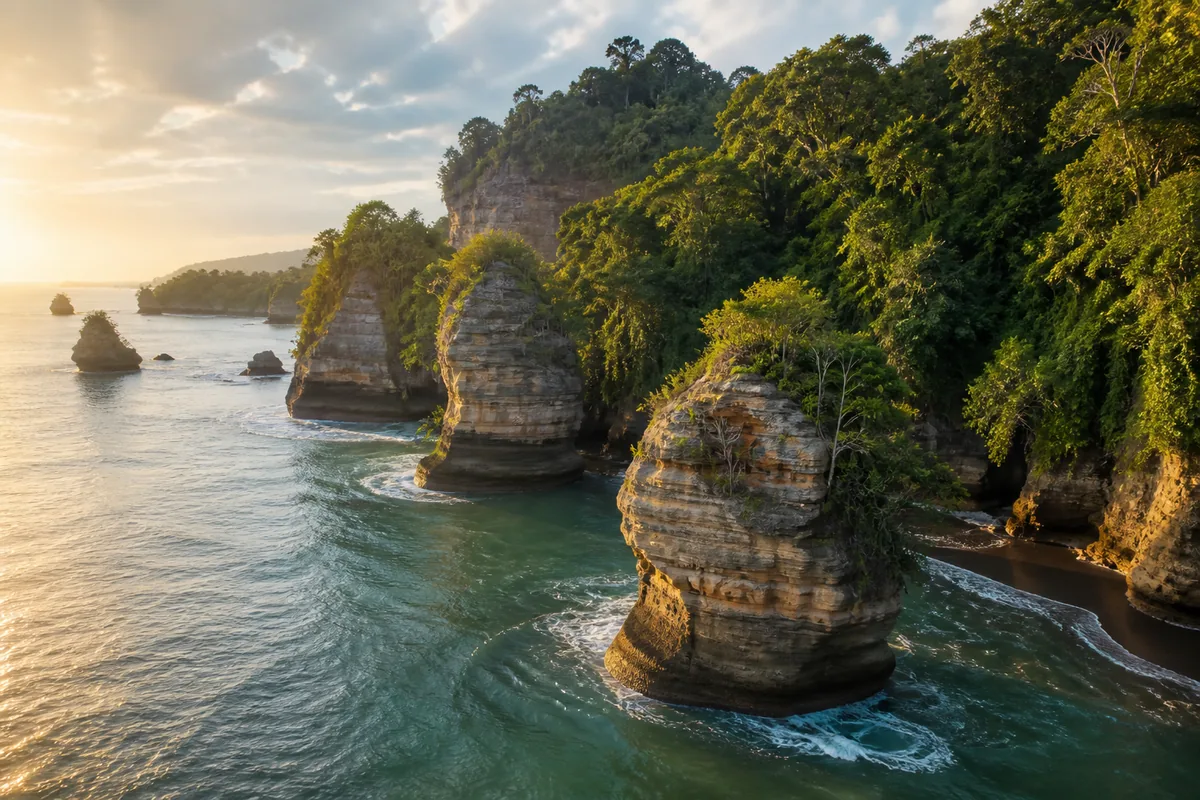 Nature Explore
Bako National Park
Bako National Park, Sarawak’s oldest national park, sits on a rugged peninsula near Kuching reached by short boat from Bako village. Trails cross beach, cliff and jungle habitats where proboscis monkeys, wild pigs and pitcher plants are among the draws. Its character is raw coastal Borneo within easy reach of the city: mangrove edges, sea stacks and overnight options for dawn wildlife. Book boats and trails early on weekends, bring sun protection and water, and stay quiet on paths for the best chance of seeing wildlife. A day at Bako feels wild yet practical—boat in, hike out, and return with salt air still in your clothes.
View details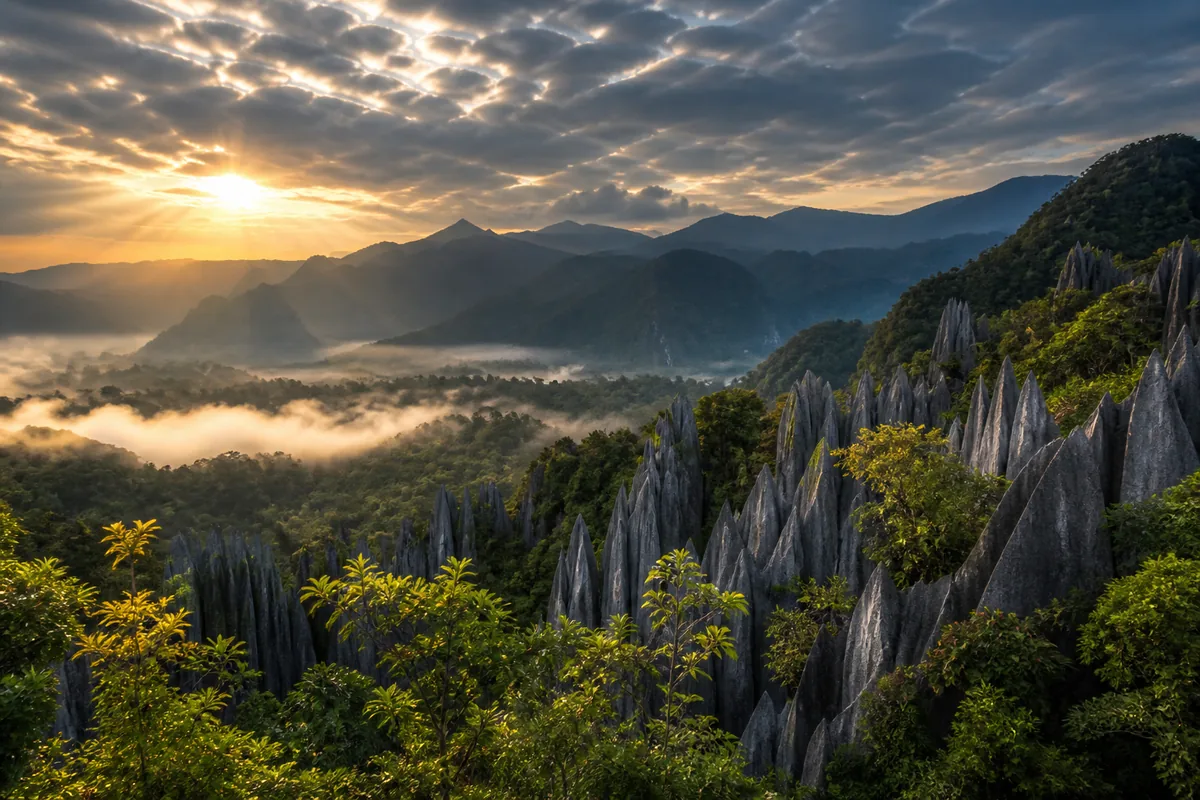 Nature Explore
Gunung Mulu National Park
Gunung Mulu National Park is a UNESCO World Heritage wilderness in Sarawak, famed for vast cave systems, razor limestone pinnacles, and unbroken rainforest. Deer Cave, Clearwater Cave, and the Pinnacles trek reveal geology shaped over millions of years, while evening bat flights from cave mouths are an unforgettable natural spectacle. The park stands among Borneo’s most celebrated conservation landscapes. Visit for guided cave walks, canopy and jungle trails, and a sense of deep time in living forest. It rewards travellers who want more than a quick photo stop—proper wilderness with world-class karst scenery and rare biodiversity. Plan time, permits, and local guides; Mulu is best savoured slowly.
View detailsWind Cave Bau
Wind Cave Bau is a limestone wind cave at Bau, best known as the easy partner to Fairy Cave. Boardwalks thread through chambers where bats and swiftlets cling to the ceiling, and cool drafts hint at the subterranean ecology of Sarawak's karst hills. Expect a short, atmospheric walk rather than a long trek—ideal after Fairy Cave for wildlife sounds, moist rock walls and a closer look at cave life near Kuching.
View detailsGunung Gading National Park
Gunung Gading National Park, near Lundu in western Sarawak, is celebrated for Rafflesia—the world’s largest flower—when blooms appear after rain-soaked weeks. Dense rainforest, clear streams and modest waterfalls reward hikers who follow marked trails from the park headquarters into the hills. Beyond the famous flower, the park offers an accessible introduction to Borneo’s lowland jungle: bird calls, mossy boardwalks and cool shade beneath the canopy. Visit after checking bloom reports with park staff, allow a half-day for trails, and bring insect repellent and sturdy shoes for muddy paths. Whether the Rafflesia is in bloom or not, Gunung Gading still rewards a quiet half-day among streams, birdsong and Borneo forest shade.
View detailsDamai Beach
Damai Beach near Kuching stretches beneath the Santubong peninsula, where sea views meet rainforest-clad hills. Resorts, calm water and sunsets make it a favourite escape from the city, often paired with the nearby Sarawak Cultural Village. The belt feels like Sarawak’s leisure coast: coastal walks, boat trips around the cape, and mountain backdrops for evening light. Come for an easy beach half-day, book Cultural Village shows if you want culture with sand, and watch weather before sea activities. Whether you swim, lounge or simply watch Santubong change colour at dusk, Damai is Kuching’s most convenient coastal reset.
View details